Planting
This felt like the biggest step to bringing Bee Kind Blooms to life!
Without precision agriculture it would be so difficult to create this image amongst a crop.
Steps to planting the patch:
1- Create the prescription
2- Wait for ideal planting conditions
3- Planter set-up
4- Plant
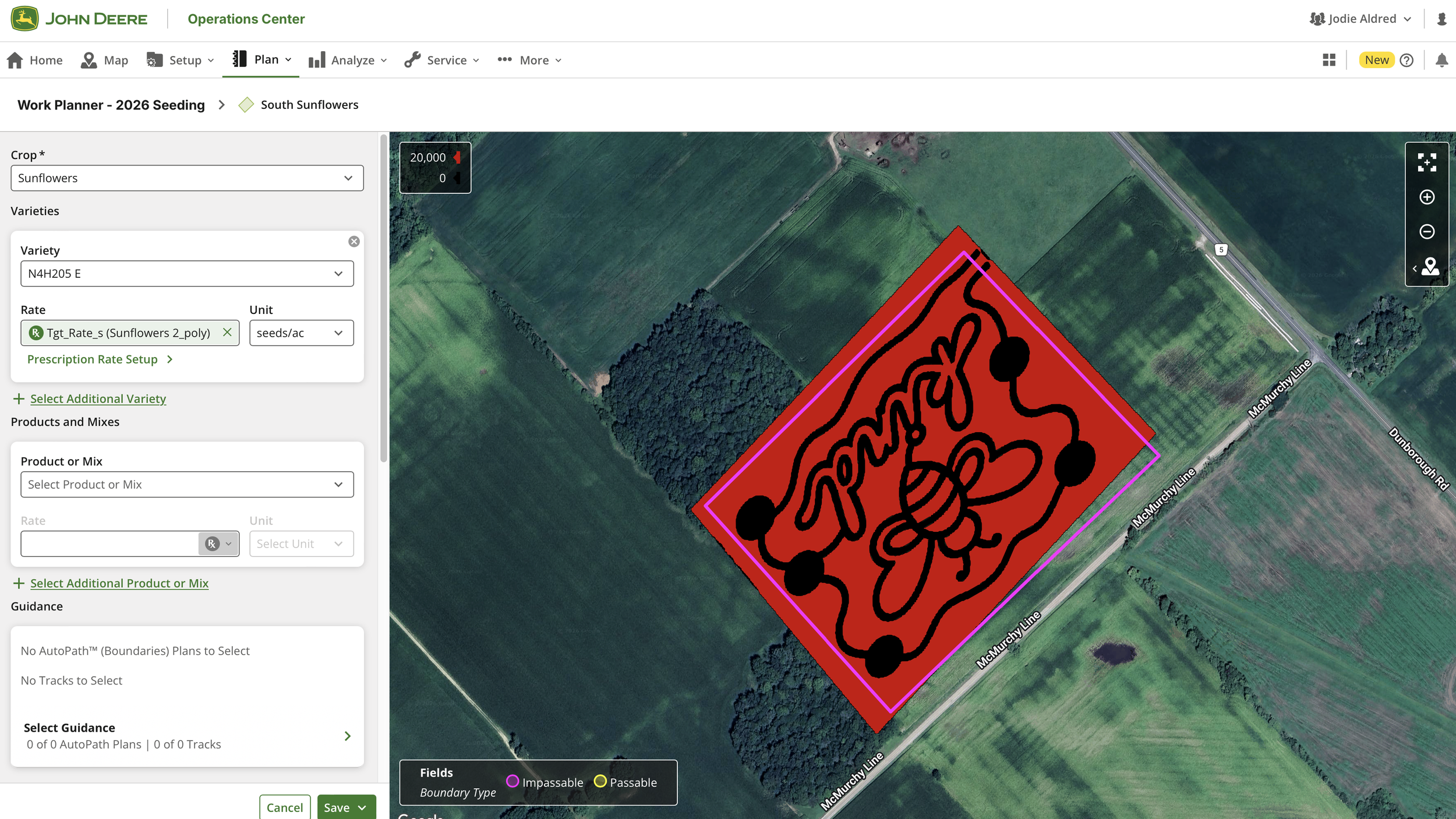
Create Prescription
Using John Deere Operations Centre. Podolinsky Equipment created a map for the planter. The map is called a ‘prescription’. Feeding the technology of the tractor and planter, information about where, what and how much to plant!
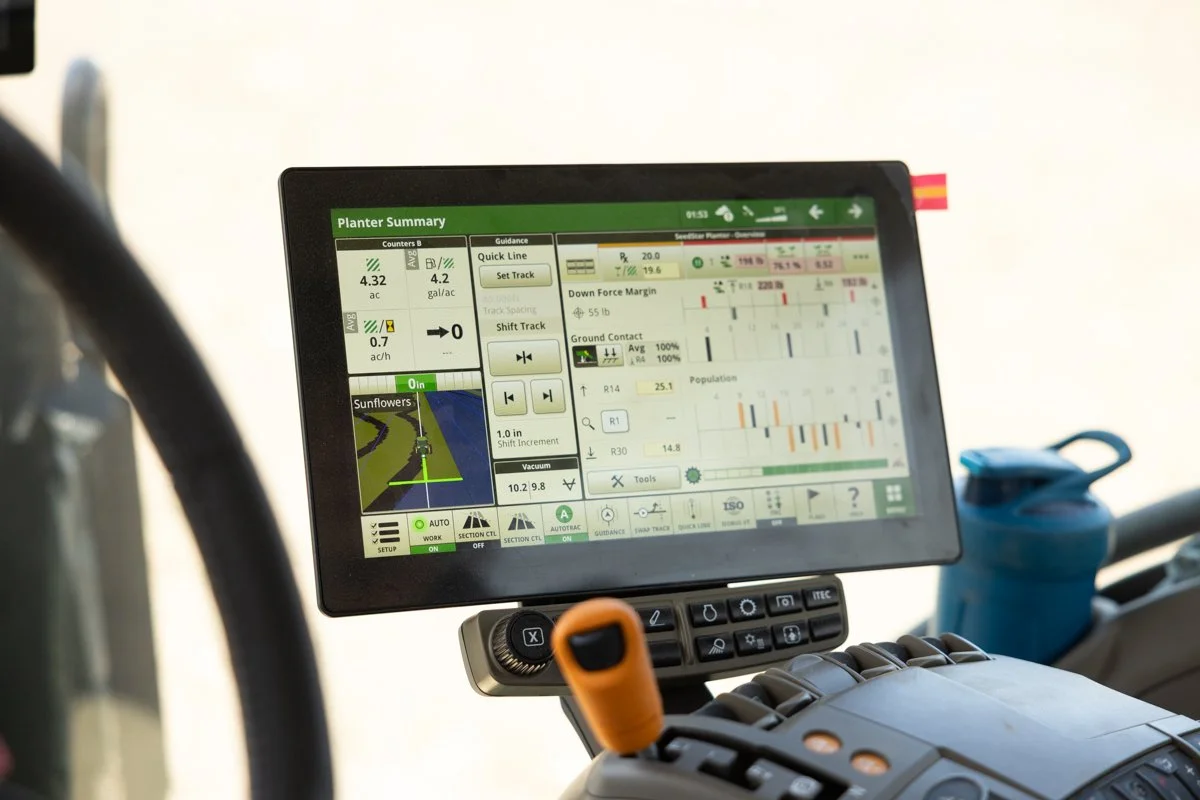
Automatic row shut off:
When a prescription is put into a tractor and planter with the special technology - automatic row shut off can be utilized. Automatically turning individual planter rows or sections on and off based on GPS position.
Farmers use it mainly to:
Eliminate overlap at headlands and point rows
Avoid double-planting in overlaps (like overlaps from previous passes or odd-shaped fields)
Reduce seed cost
Improve crop uniformity
Reduce competition between plants (better yield consistency)
Without it, a planter can easily double-seed areas when turning or when passes slightly overlap—especially in irregular fields.
In this case - we are using to create a magical design!!
Pretty cool right!
Prescriptions:
This is when a farmer uploads a prescription map to the planter… that tells the planter:
Where to plant normally
Where to plant less seed (poor soil zones, sandy knolls)
Where to plant more seed (high-yield zones)
Where not plant at all
That “not to plant” part is used for things like:
Wet holes / drowned-out areas
Rock piles or gravel patches
Field edges, buffer zones, waterways
Already planted cover crops or experimental strips
Areas going into turn lanes, tree lines, or odd corners
Because planting in bad zones can:
Waste expensive seed and fertilizer
Create poor producing crops
Increase disease pressure (uneven crop stages)
Reduce overall field profitability
Ideal Planting Conditions
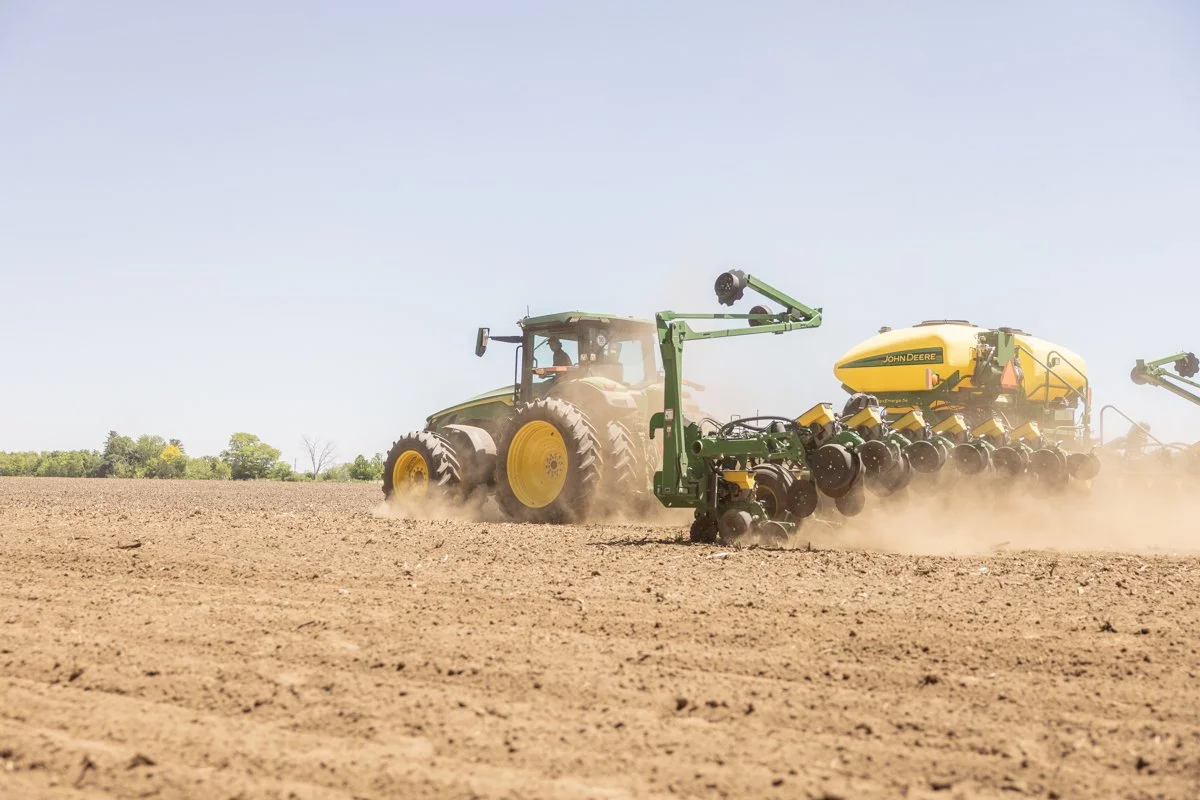
This year 2026 we started the planting season off with a lot of rain. This means we had to wait a bit longer for the ground to be ready for planting!
Why wait?:
Soil temperature affects germination
Seeds sit in the ground longer → higher risk of rot or disease
Emergence becomes patchy (uneven crop)
‘Just right’ - not too wet and not too dry
Too wet → seeds can rot, oxygen is limited, and soil smears
Too dry → poor seed-to-soil contact and delayed germination
Soil compaction damage
If fields are worked when too wet:
Machinery squeezes air out of soil pores
Roots struggle to grow downward
Compaction layers can last for years
Planting depth and seed placement
Ideal conditions allow the planter to:
Place seed at correct depth
Close the furrow properly
Maintain consistent spacing
Ensuring the crop is planted in ideal conditions to sprout with ease will help produce the best yield.
Planter Setup
Set target population
Enter seeds per acre
We planted the sunflowers at about 20,000 seeds per acre!
Set planting depth
Adjust depth for moisture and crop requirements
We planted 1.25–1.5 inches
Adjust downforce
Enough pressure so row units hold depth
Not so much that the planter compacts soil around the seed
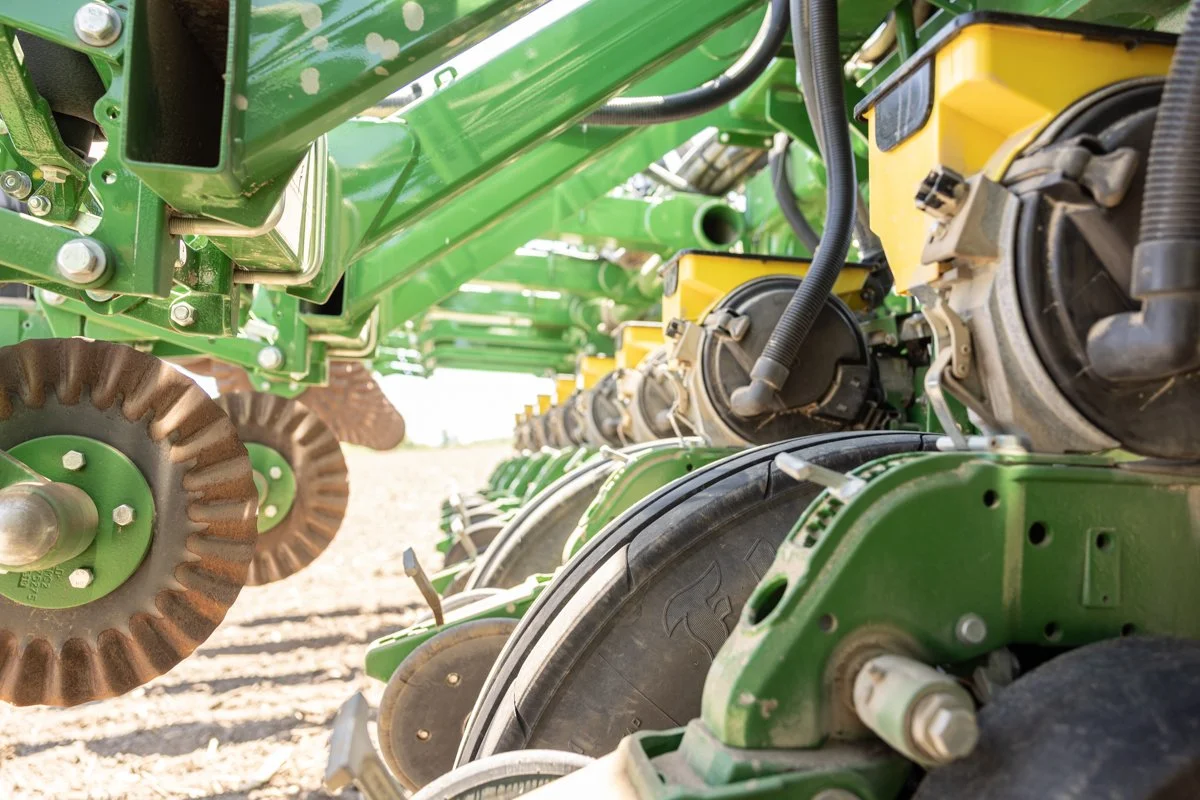
Because we used a corn planter and this is sunflower seed. We had to ensure the seed size worked for the type of plate on the planter